Cohousing in The Netherlands
Description
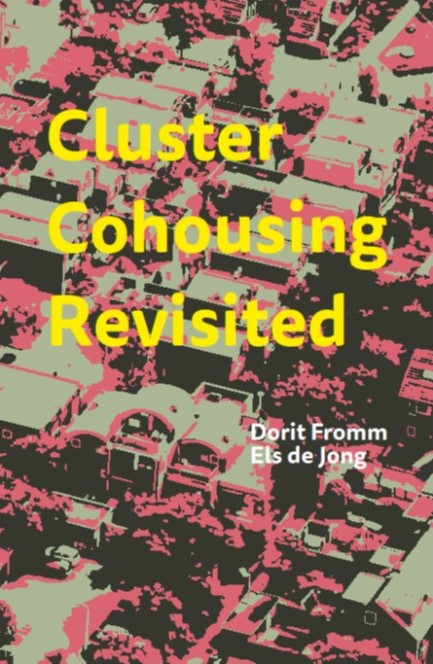 A number of architecturally bold, collaborative housing projects have been built in the past half century, based on ideas by future residents and realized in a participatory design process. This book revisits one pioneering grassroots development, the Wandelmeent, the first cluster cohousing built in Holland. Part of the famous Dutch experimental housing of the 1970s, the Wandelmeent creates small clusters, sharing a common kitchen and dining room, within a larger community of 50 households. With aspirations of close neighboring, the residents have created private, semi-private, common and public spheres. Cluster Cohousing Revisited walks readers through the history of the Wandelmeent’s beginning, the inspiration for its novel design, and the process of bringing a community to life. Authors Els de Jong and Dorit Fromm describe how the ideals that shaped the Wandelmeent are embodied in the daily lives of its current residents. This “co-occupancy” evaluation is a case study to see if and how cohousing can support community cohesion, promote intergenerational diversity, and enable residents to manage their community spaces, while maintaining independence and privacy. Cluster Cohousing Revisited is a valuable resource for any reader interested in examining how experiments with cohousing allow designers and residents to build and live differently.
A positive review
Since the birth of cohousing ideas around 1970 many different projects have been established in a number of countries, and they have by now been lived in for several decades. The very important question about what happened over time has now been thoroughly researched and communicated in this eminent book by Dorit Fromm and Els de Jong. This new book brings very valuable insights concerning cohousing and is well timed as a source of inspiration for the second wave of cohousing projects which is presently gaining momentum.
Jan Gehl, Professor (rtd), Architect MAA & FAIA
About the authors
Els de Jong was a social researcher on housing and founded her own company “Wono Woononderzoek” (Wono Housing Research) in 1990. She researched and published on alternative housing forms, participation projects and special housing, like cohousing, energy-efficient housing, healthy housing, and senior housing. She was a student of Beatrice Kesler, who researched the Wandelmeent in the 1970s. See www.wono.nl
Dorit Fromm is a design researcher and writer, an architect, and has worked in communications for the design industry. She has researched a variety of community and housing designs, conducted post-occupancy evaluations of multi-unit housing and presented on new forms of housing internationally. Her book, Collaborative Communities, published in 1991, first described the variety of European and American models of collaborative housing. Her interest in clusters was sparked as a student working with architect Christopher Alexander in Mexicali building low-income housing.